

Nuts vs. Bolts vs. Washers


Nuts and bolts work together with washers to connect workpieces.
Bolt
A bolt has a head (typically hexagonal) with driving surfaces, as well as a shaft that runs through the workpieces you’re assembling. The shaft is threaded but often has an unthreaded portion known as the shank or body near the head. The shank is stronger than the threaded portion and reduces the likelihood of the bolt snapping.
Washer
In most assemblies, you’ll need a washer — a thin, unthreaded piece that fits onto the bolt shaft. Depending on the washer type, it either spreads the load of the connection over a greater area or helps prevent the fastener from loosening.
Nut
A nut pulls the workpieces together along the bolt shaft. A nut designed to work with a bolt will have a driving surface like that of the bolt, so a hexagonal nut works with a hex-head bolt. You’ll often need two wrenches so you can hold the bolt head in place while tightening the nut. To properly match a nut and washer to a bolt, you need to consider factors such as material, finish, size and thread type.
See our screws guide and nails guide to find out about other fastening options
Fasteners, Safety and Building Codes
- Many fasteners are designed for specific purposes and aren't suitable for other applications, while some applications require particular fasteners.
- Local building codes may specify which fasteners can be used with a project. Always follow code specifications and the fastener or structural hardware manufacturer's instructions.
- Not all fasteners are strong enough for structural support, such as use in a deck frame.
What Are the Different Types of Bolts?

Different bolts have different uses. Applications call for specific materials, finishes, threading and sizes to provide the best connections.
Bolt Materials
- Steel is a common material for nuts and bolts, but standard steel needs a corrosion-resistant finish if it is exposed to moisture or pressure treated lumber.
- Stainless steel provides high levels of corrosion resistance and is typically suitable for exterior projects and projects that use pressure treated lumber.
- Hardened steel bolts have increased strength and are often used in automotive assemblies.
Bolt Finishes
- Zinc-plated bolts have a thin finish that’s for indoor use and not suitable for outdoor use or use with pressure treated lumber.
- Hot-dipped galvanized bolts have a higher level of corrosion resistance and are suitable for exterior use and for fastening pressure treated lumber.
- Powder-coated paint finishes are designed for interior use.
- Black phosphate allows good adhesion for paint.
- Epoxy and other coatings offer different levels of corrosion resistance depending on the type of coating.
Bolt Threads
Coarse-threaded nuts and bolts have more space between the threads. They'll be labeled with a higher thread pitch. These are less likely to get jammed or cross-threaded. In general you can secure a coarse-threaded bolt and nut more quickly than a bolt and nut with fine threads.
Fine-threaded nuts and bolts with lower thread pitches have smaller gaps between the threads, giving them a tight, strong hold. Vibrations are less likely to loosen a nut on a fine-threaded bolt, but it takes longer to install or remove the nut.
Be sure to match the thread type of a nut to the bolt.
Hex Bolts

A hex bolt gets its name from its six-sided head. Some hex bolts (called tap bolts) have threads running the full length of the shank. Hex bolts are used for wood-to-wood or metal-to-wood connections. The thicker, unthreaded shoulder portion of a partially threaded hex bolt provides additional strength to the fastening job. Hex-head bolts are common in construction and automotive applications.
Carriage Bolts

The domed head of a carriage bolt gives a smooth, finished appearance and adds a measure of safety and security to wood-to-wood and wood-to-metal connections. These bolts are installed through predrilled holes. Carriage bolts have a square area under the head that helps lock the bolt to the workpiece, making tightening the nut easier. Carriage bolts are used for projects such as decks, furniture and outdoor playsets.
Anchor Bolts

Anchor bolts are designed to be embedded in concrete to make connections with other structural pieces. Toggle bolts are anchors for hollow walls. They can support items when it's not possible to drill into a wall stud.
U-Bolts

U-bolts have two threaded shanks. Rounded U-bolts secure pipe or conduit to a surface, while squared U-bolts fasten items to a flat surface, such as a square post. Two nuts and a metal plate secure the U-bolt.
Eye Bolts

Eye bolts have a loop or ring end and a threaded end, allowing you to secure chain or tie down rope to wood, metal or concrete surfaces. Eye bolts are designed for predrilled holes. Screw eye bolts are similar but have coarser self-tapping threads and a pointed tip for driving into a pilot hole in wood.
Hanger Bolts

A hanger bolt is a headless fastener with machined threads on one end, and coarse self-tapping threads at the pointed end. This allows for driving the bolt into a predrilled hole in wood or similar materials. These bolts are used for applications like hanging materials from wood beams and boards or installing furniture legs.
Lag screws may sometimes be referred to as lag bolts. A lag bolt or lag screw is a heavy-duty screw with a hex head and coarse threads running partially down the shank and a sharp point.
What Are the Different Types of Nuts?

Different types of nuts work for different applications. Match the nut material to the bolt material. For example, stainless steel bolts need stainless steel nuts. The nut and bolt threads need to match to ensure a secure fit. For example, coarse-threaded bolts require coarse-threaded nuts.
Hex Nuts

Hex nuts have six surfaces, like the head on a hex bolt. They're a common type of nut used with bolts to secure wood and metal components.
Lock Nuts

Lock nuts have six drive surfaces and a built-in nylon ring. As you install a lock nut onto a bolt, the threads deform the ring, increasing friction and helping prevent loosening caused by slipping or vibration.
Wing Nuts

Wing nuts allow you to tighten or loosen the fastener with a thumb and finger. These nuts allow quick and easy adjustments and removals. You might see them on light stands and other items that need frequent adjustments.


What Are the Different Types of Washers?

Washers typically go on the nut side of a nut and bolt assembly, unless a manufacturer’s instructions specify otherwise. The most common function of a washer is distributing the fastener load evenly across a wide area, helping prevent the fastener from tearing through or cracking the workpiece. Some washers help keep nuts and bolts securely fastened, while others function as spacers.
The inner diameter of a washer should match the outer diameter of the bolt.
Flat Washers

Flat washers are the most common washer. Use these in general repairs and assembly applications. In addition to spreading the force of a nut or a bolt over a larger area, you might also use a flat washer to prevent a nut from digging into the material and weakening the connection. In some applications, a flat washer functions simply as a spacer.
Fender Washers
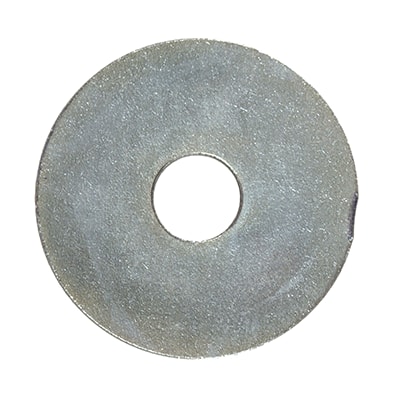
Fender washers are like flat washers but are thinner and have a larger outside diameter relative to the center hole. This design gives fender washers more surface area to distribute the load from fasteners and makes them especially effective with softer materials. Fender washers get their name from use in automotive work, but they’re also used in electrical and plumbing applications along with sheet metal work.
Lock Washers

Lock washers help prevent a nut and bolt from vibrating or rotating loose. There are several types.
The ends of a split lock washer create spring pressure between the workpiece and the nut to hold the fastener in place. The ends on the washer can also bite into the workpiece and the fastener.
Wave lock washers have a shape that creates a spring action when compressed, similar to that of the split lock washer.
Toothed lock washers bite into the nut or bolt to create resistance against turning. You’ll usually see external-tooth lock washers on larger bolt assemblies. An internal-tooth lock washer creates a cleaner appearance with small fasteners. Both types work best for plastic and softer metals.
Overtightening lock washers reduces their locking action.
Finishing Washers

Finishing washers, also known as countersunk washers, work with screws. A concave surface allows you to countersink a flathead screw against the washer for a neater appearance. Some finishing washers are designed for specific types of screw heads.
Though not always required, using washers with screws can offer the same benefits as using them with bolts. For example, a flat washer can keep you from driving a screw head into soft wood.
Key Points to Remember for Bolts, Nuts and Washers
Bolts, nuts and washers work together to create strong connections between workpieces. While there are many types, materials, finishes and sizes, here are the main points a typical DIYer needs to remember.
- A bolt has a threaded shaft that runs through fastener holes in workpieces.
- A nut tightens along the bolt threads to secure the workpieces together.
- Depending on the design, a washer distributes the load of the nut, helps keep the fastener tight or acts as a spacer.
- Bolts, nuts and washers need to have matching sizes and finishes.
- Bolts and nuts need to have the same type of coarse or fine threading.
- Hex-head bolts for wood-to-wood and metal-to-metal connections, as well as carriage bolts for wood-to-wood assemblies, are the most common types of bolts.
- Hex nuts are common for use with hex-head bolts and carriage bolts, while lock nuts are useful when there’s a risk of the fastener slipping or vibrating loose.
- Flat washers are the most common washer type and help evenly distribute the load of a nut against a workpiece.
- Lock washers help keep a fastener from loosening.
Shop Lowes.com for the nuts, bolts and washers you need, as well as the wrenches or ratchet and socket set you need to install them securely. If you’re not sure which fastener you need, visit your local Lowe’s and talk to one of our Red Vest associates. They’ll help you match bolts, nuts and washer types and sizes to your project. They can also show you the specialty bolts or nuts you need to finish any job.
Bolts, Nuts and Washers FAQ
With so many types of bolts, nuts and washers, it can be confusing deciding which fasteners you need. Use the answers to these questions to help you find the right ones for your project.
What Size Bolt Do I Need?
In general, the bolt diameter should match the size of the bolt hole and the bolt length should allow three threads to be exposed once the washer and nut are fastened securely. However, always defer to the manufacturer’s instructions for any fastener or any item you’re assembling.
What Size Washer Should I Use With a Bolt?
Choose a washer with an inner diameter that matches the bolt diameter. Manufacturers often package nuts, bolts and washers together so you can be sure you get matching sizes.
Does a Washer Go on the Nut Side or the Bolt Side?
In most cases the washer goes on the nut side, between the bolt and the workpiece, but always check the manufacturer’s instructions. In some applications, such as with some lock washers, the washer goes on the bolt side.
How Can I Organize My Nuts, Bolts and Washers?
Look for small parts organizers to keep all your fasteners arranged and in one place. You can choose from a multi-bin compartment system or a briefcase style with adjustable compartments.